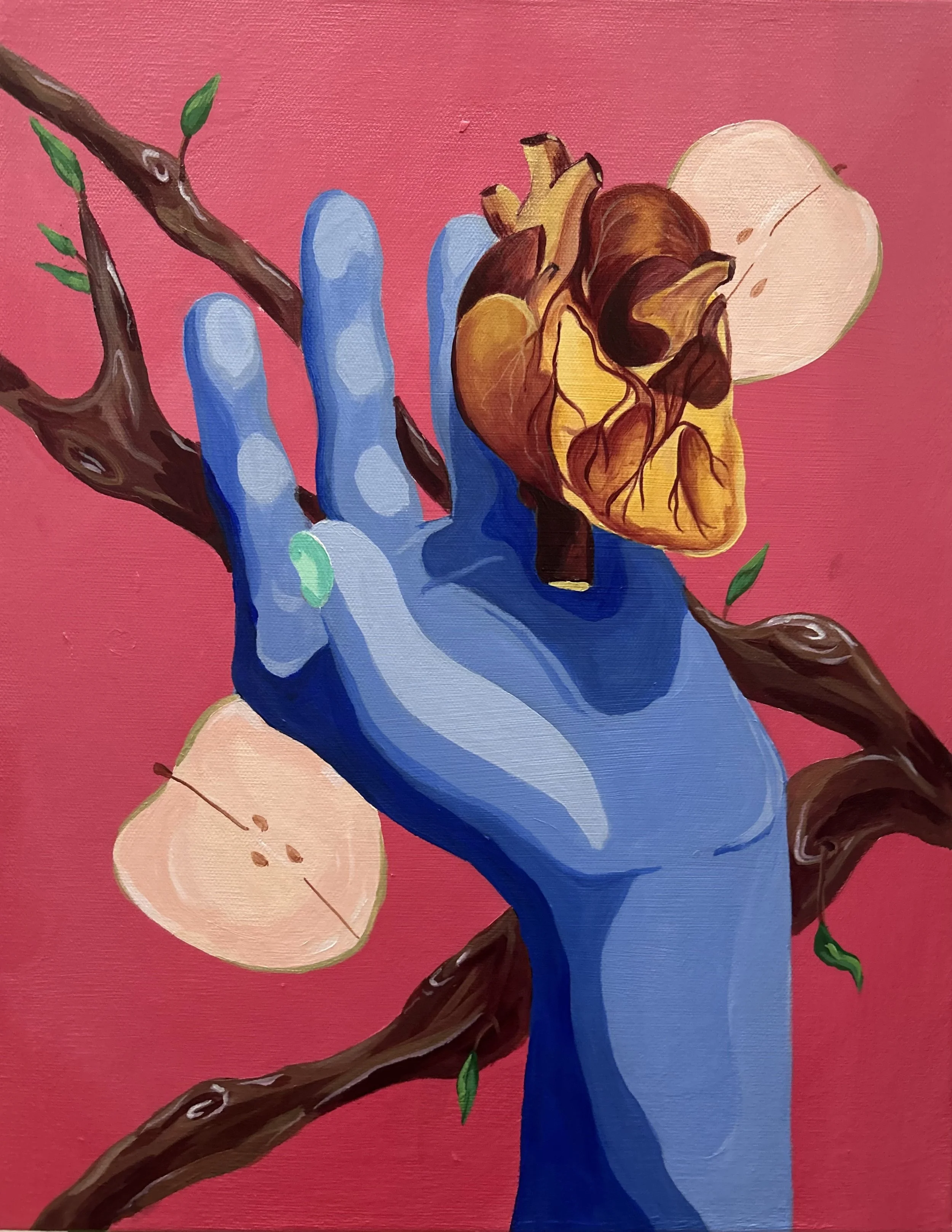
Midas Touch, 2026
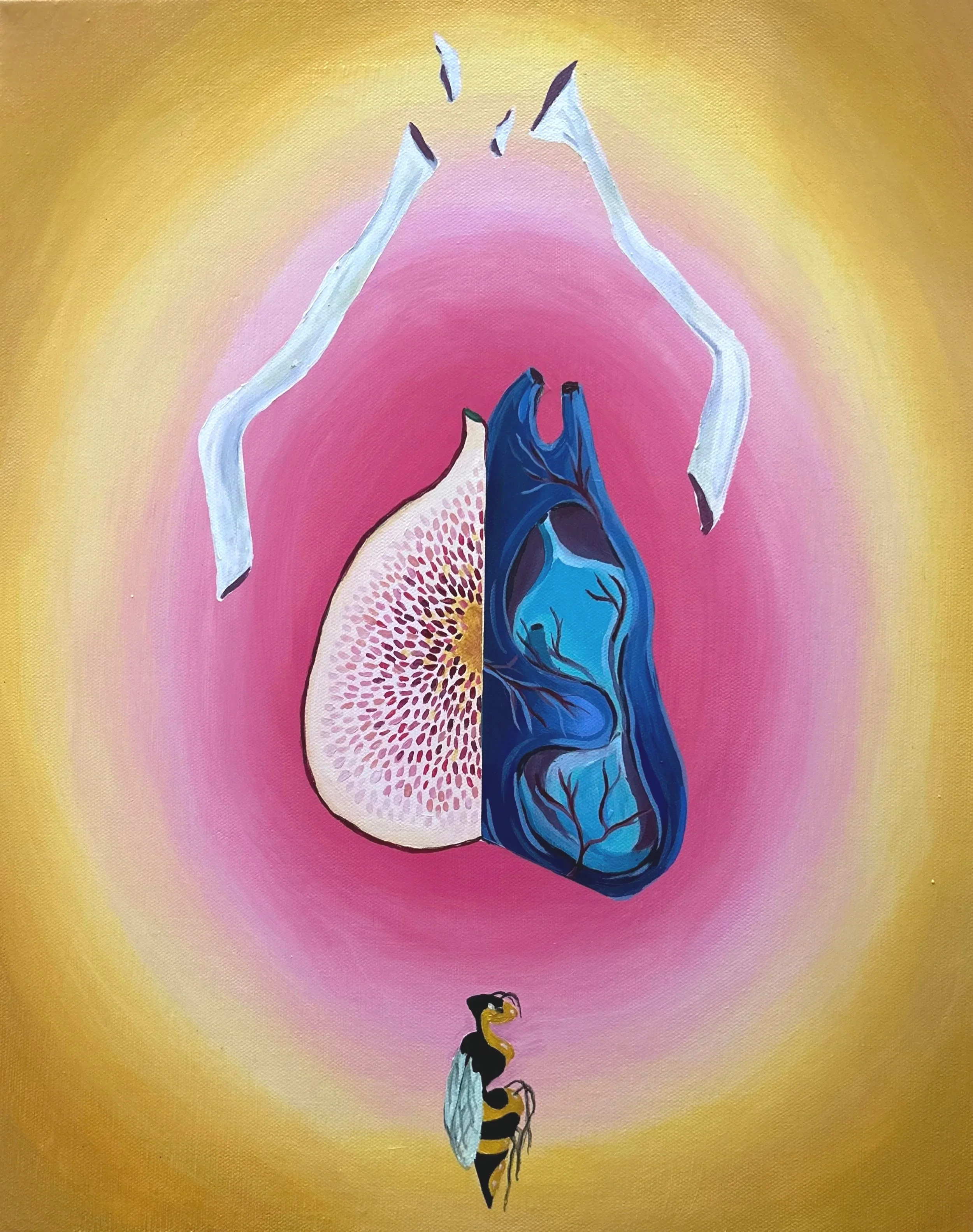
Choose, 2026
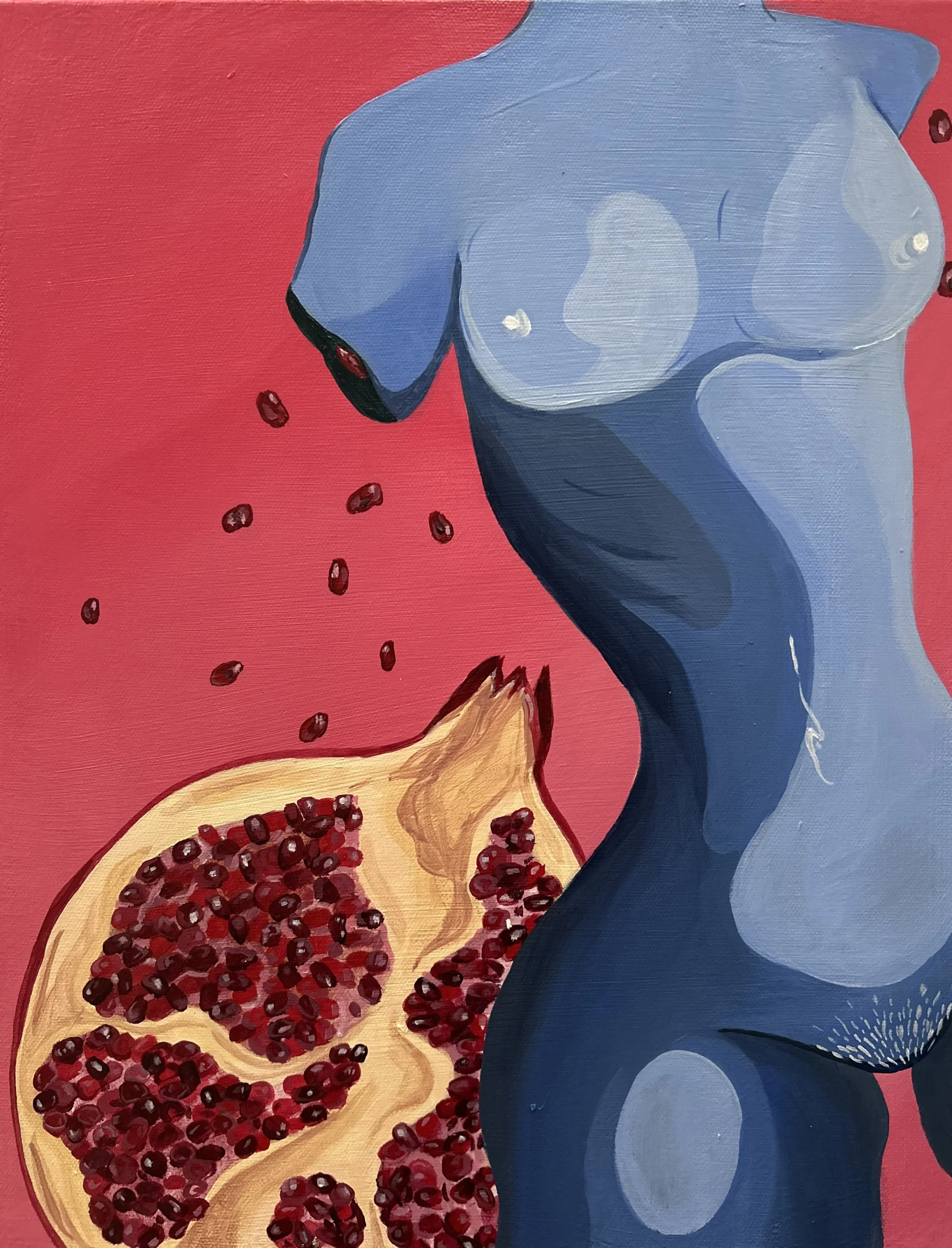
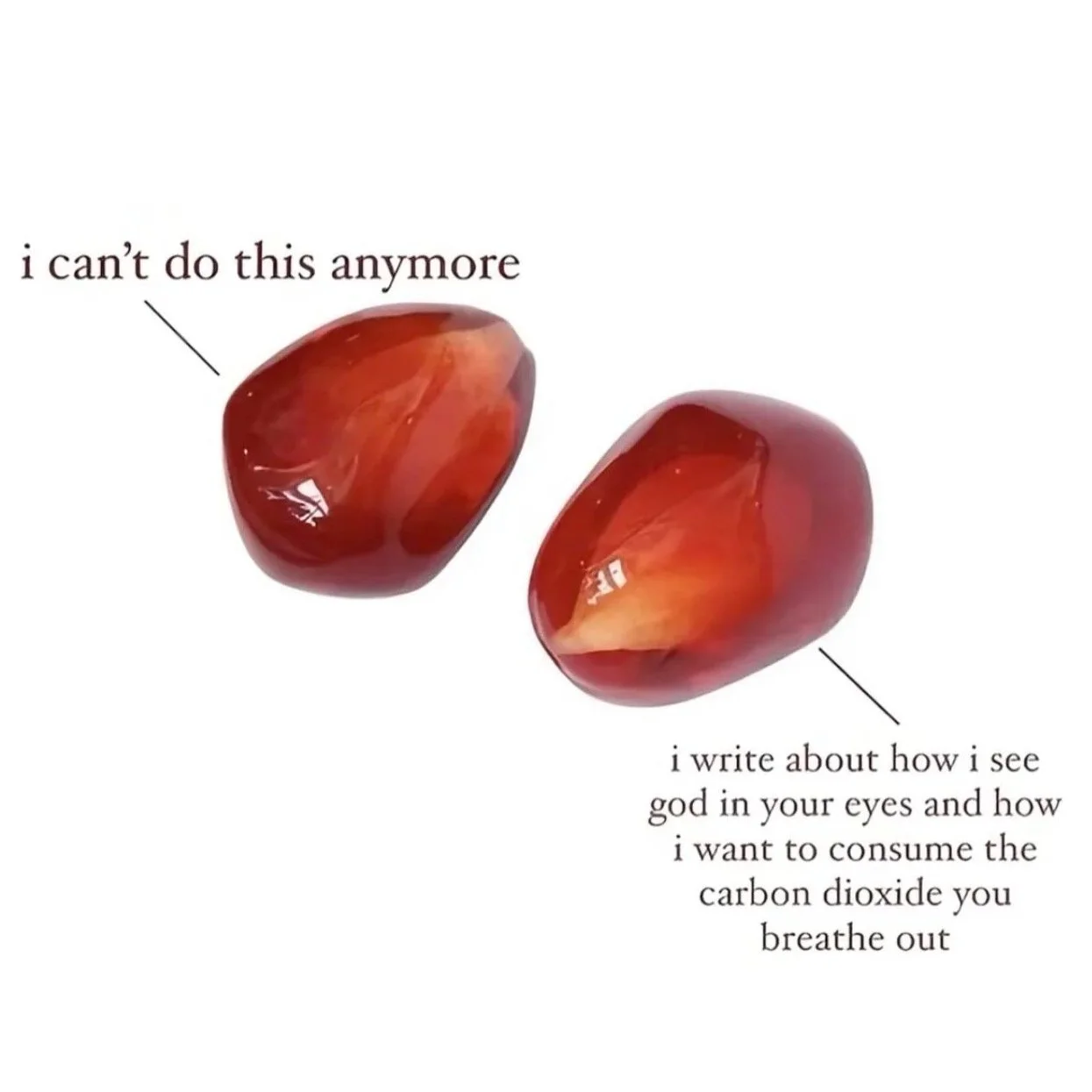
The Devil Tempted with a Pomegranate, 2026
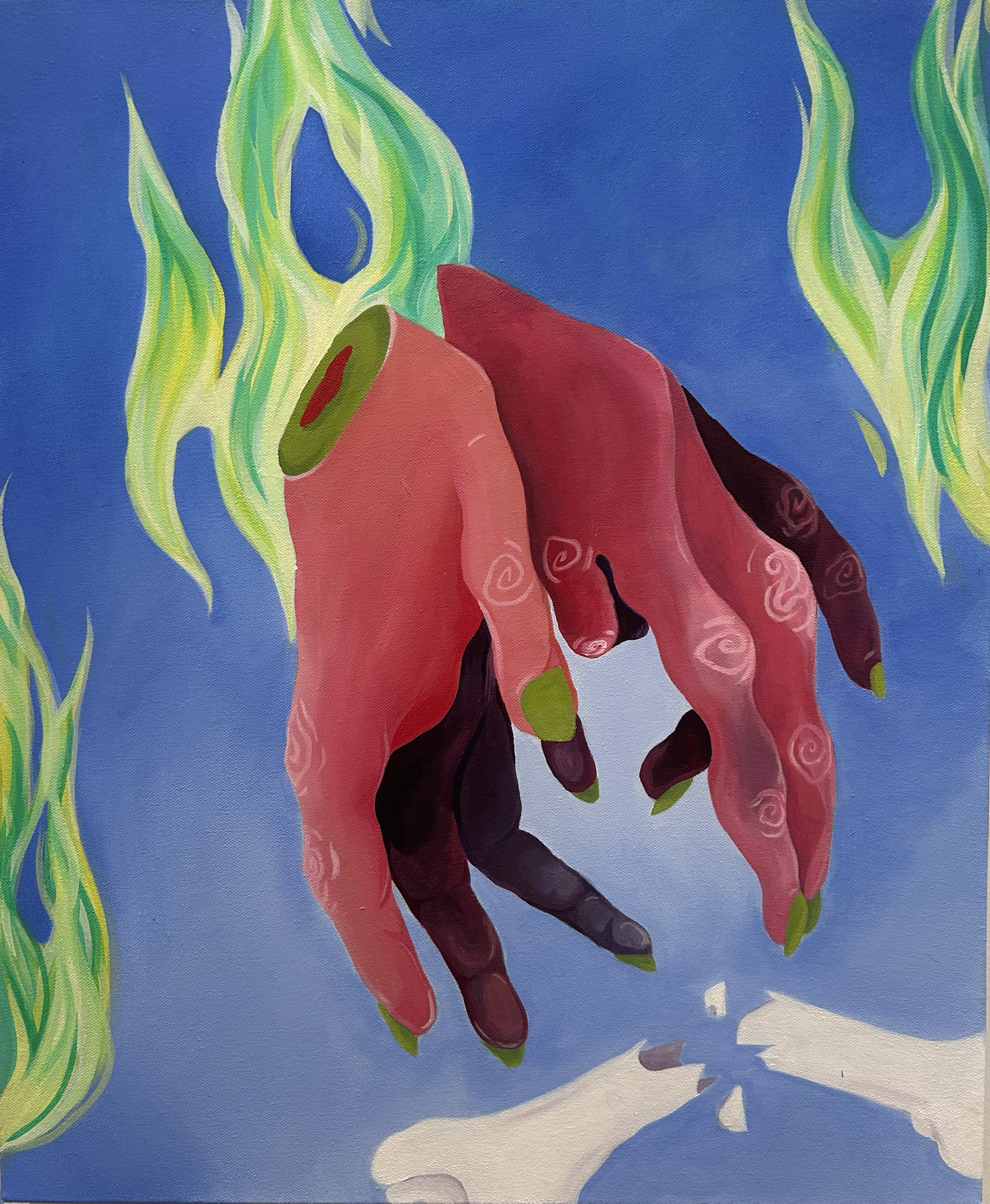
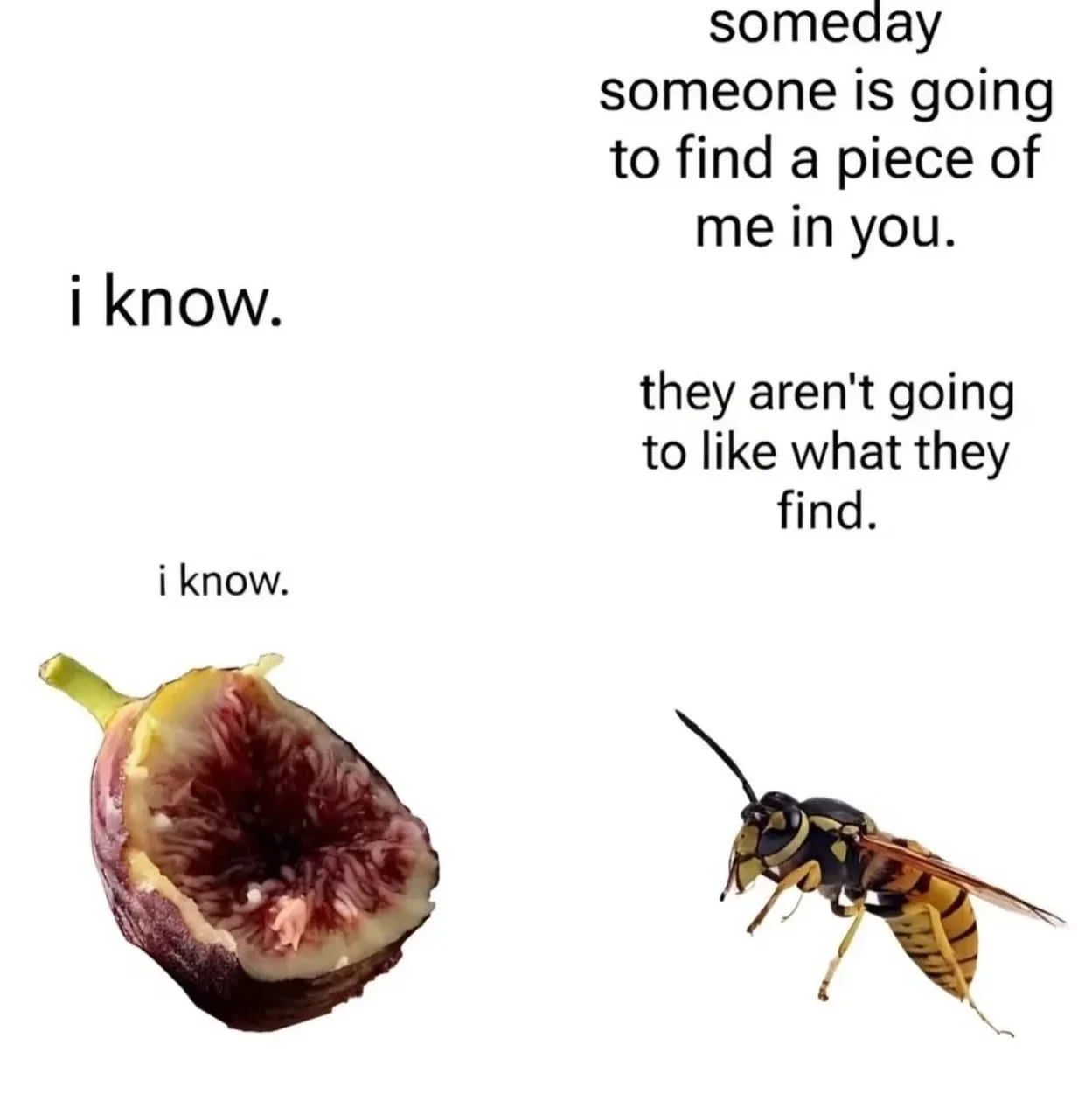
Grasping at Straws. 2025
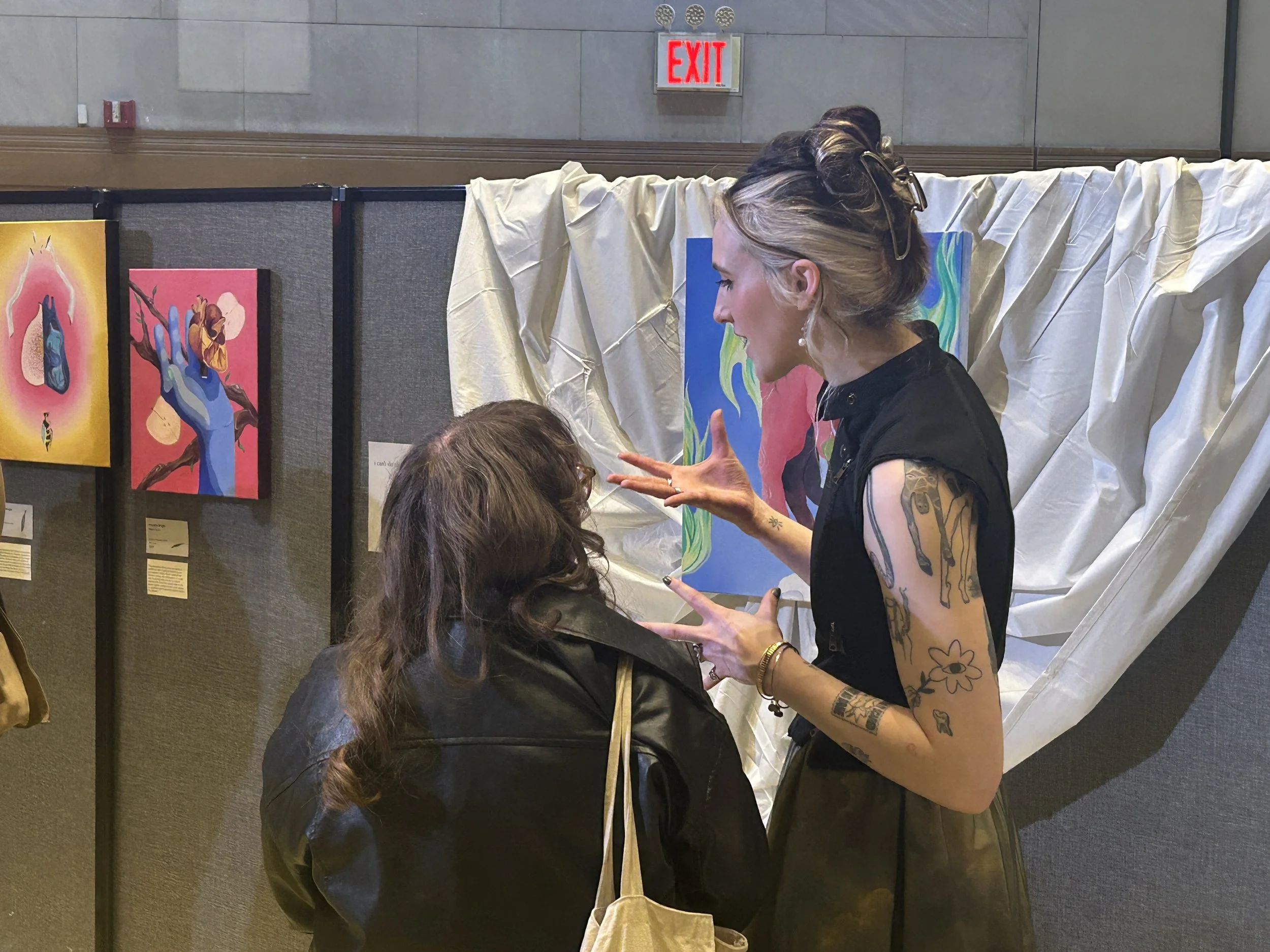
Artist Reflections
On how their work relates to care, survival, and collective nourishment, Jerusha writes:
“My practice itself is the personification of survival. It lays in a dense bed of the subconscious, and works through the memories I cannot (like spiritual EMDR). I remember a quote, ‘an artist that does not create is insufferable’ and in the periods of my life I have not done exactly that, to be frank I was. The act of creation is a form of self care. And when one takes care of themselves they can provide for others wisdom, safety, and support. For any creative being, to make is to survive; to live in fully, and to do oneself justice so we can better understand ourselves, the world, and those around us.”
Jerusha goes on to say:
“Creative labor as holy work is the phrase I have looked for my whole life to describe what it means to create. I could not have said it better myself. As God’s creatures, we are made in their image. And if God has made everything, to me they must be an artist. The act of making is itself a spiritual task, with it comes imagination, bravery, and mastery of one’s visions and skills. It is hard work, laborious, but feels meditative when made in prayer.”
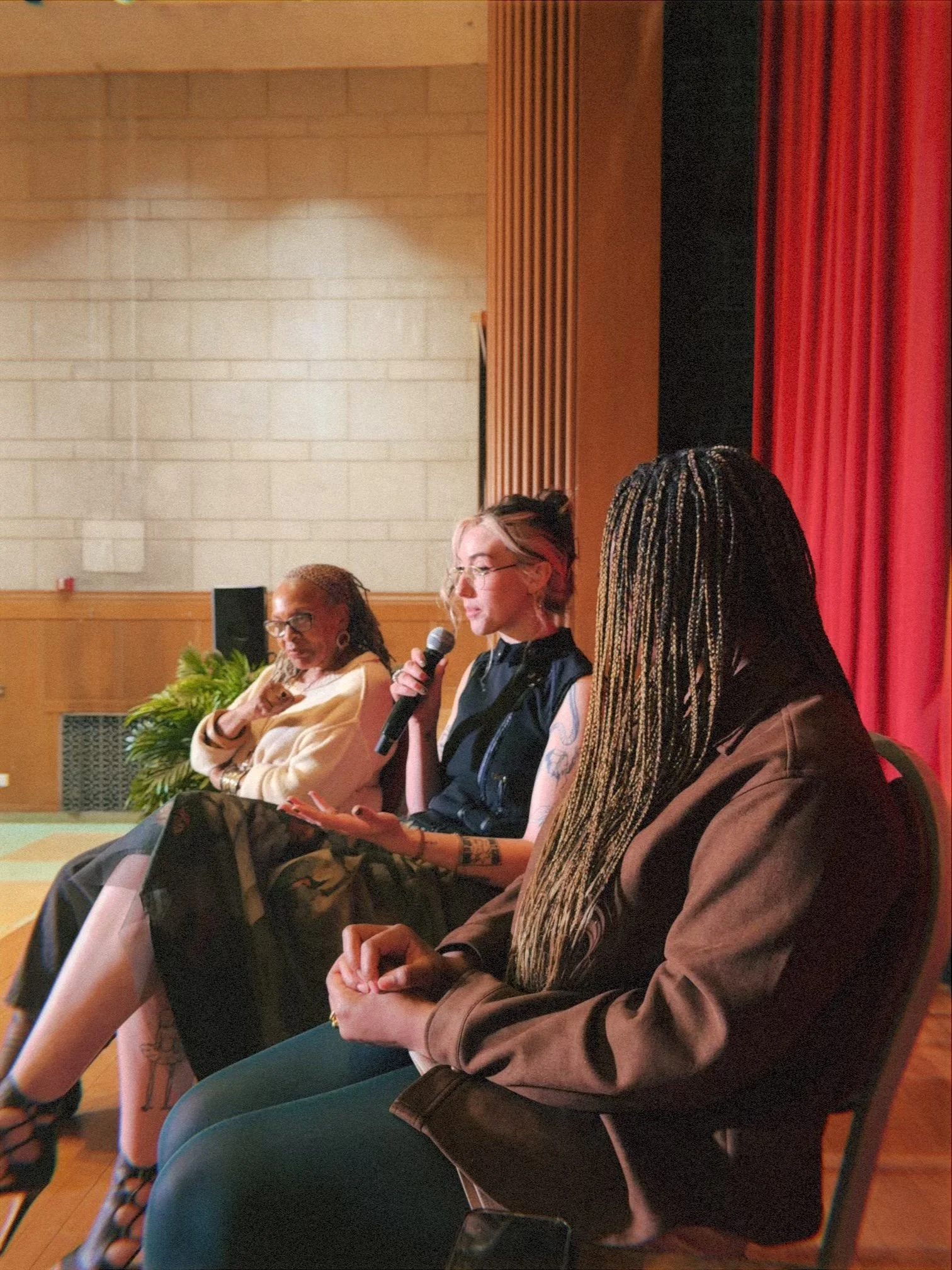
Exhibition Foreword
When I heard about an art show for NYC artists at The Riverside Church called Creative Labor is Holy Work, I experienced “synchronicity.”
Synchronicity is a term Julia Cameron writes about in The Artist’s Way (1992), a seminal text, half workbook, half guidebook, that puts forth the belief that there is innate, God-given creativity within all of us. Every single one of us—even those who declare, “I can’t draw” or “I have no creativity”—has the aptitude to create because, as Cameron puts it, “Creativity is the natural order of life. Life is energy: pure Creative energy.” This statement is a part of the Basic Principles with which Cameron begins The Artist’s Way, and I’d like to highlight a few more:
There is an underlying, in-dwelling Creative force infusing all of life—including ourselves
When we open ourselves to our creativity, we open ourselves to the Creator’s Creativity within us and our lives
We are, ourselves, creations. And we, in turn, are meant to continue Creativity by being Creative ourselves
When we open ourselves to exploring our creativity, we open ourselves to God: [which Cameron calls] good orderly direction.
And then, this one is my favorite:
Creativity is God’s gift to us. Using our creativity is our gift back to God.
If I learned anything in my systematic theology course with Dr. Andrea White on the doctrine of the trinity, I know that when we think about God as “three in one,” then we can see a model of how to be in loving relations with others in consistent, mutual processes of giving and receiving. The Trinity, that is, the Father, Son, and Holy Spirit, showcases the inner life of God—a life characterized by superabundant donation in a community of non-hierarchy and mutual reciprocity, a community whose diversity and difference is its superpower, seen in how it practices multiplicity in unity.
So … what a gift this art show is! A gift from our local NYC and Riverside artists to The Riverside Church and this community here today … a gift in the form of an invitation to stir up the Creativity within us all, the “in-dwelling Creative force infusing all of life.”
This call to consider Creative Labor as Holy Work feels synchronous with where I am in my spiritual formation, as I am currently reading Makoto Fujimura’s book, Art + Faith: A Theology of Making (2020).
The synchronicity that I’m experiencing lies in the ways I can so clearly and miraculously see Fujimura’s “theology of making” being put into practice here and embodied by these artists with us today.
In his book, Fujimura builds upon his “Culture of Care” to put forth a “theology of making.” Similar to Julia Cameron, Fujimura sees the practice of making and creating to be a divine and holy practice, an invitation to live and be as God the ultimate Maker and Creator is.
For Fujimura, making and creating art, being an artist, is so many things: from a way we can experience Christ’s resurrection to an invitation to participate in the collective imagining of the New Creation and the bringing forth of the New Kindom of God into this world, into the here-and-now.
What I love most about this theology of making is that it’s not all sugarcoated sunshine and rainbows. Fujimura writes, “Imagination gives us the wings to create, but it is through Christ’s tears and the invitation to the feast of God that we can be partakers of the New Creation.”
He goes on to say:
“[The] most outrageous promise of the Bible, which is at the heart of our journey toward the New [Creation]...[considers] our own brokenness in light of the wounds of Christ still visible after his resurrection. When Making honors brokenness, the broken shapes can [become] necessary components of the new World to come…not only are we restored, but we are to partake in the co-creation of the New through our brokenness and pain.
Put differently, we are restored, not repaired, because in a theology of making, our pain, trauma, tears, and brokenness are not things to be fixed but can be creative invitations to experience the transformative power of God’s grace and mercy.
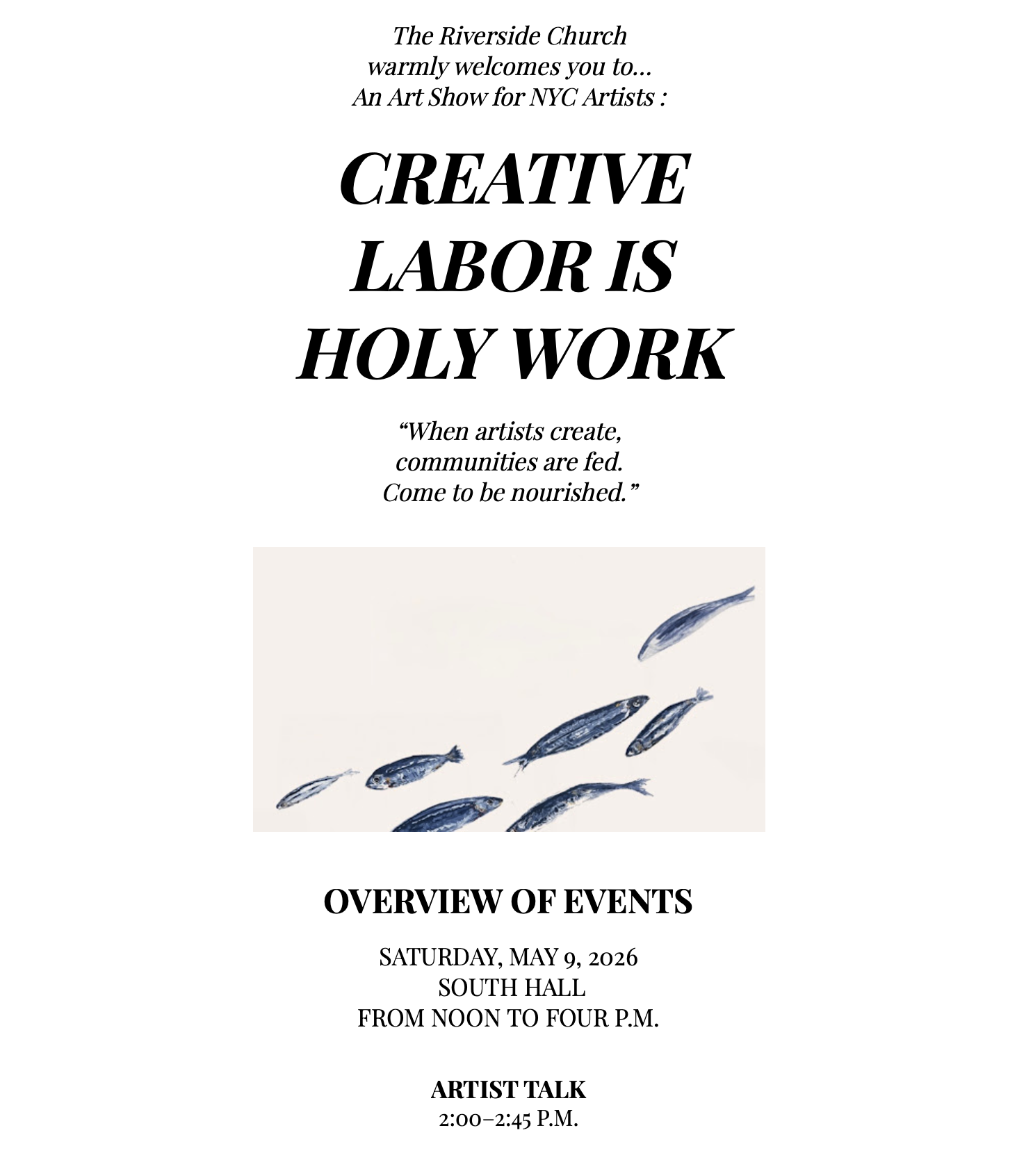
The subtitle of Creative Labor is Holy Work is “When artists create, communities are fed. Come to be nourished.”
What a treat is it to receive an invitation to partake in the feast of God’s creation …
To receive spiritual nourishment through our friends, neighbors, and community’s artistic practices and expressions of creativity …
To imagine what the New Creation, the New Kingdom of God could look like …
To experience the transformative power of God’s grace and mercy …
To see and create Beauty …
To give …
And to receive.
Reflection by Kathy Lin